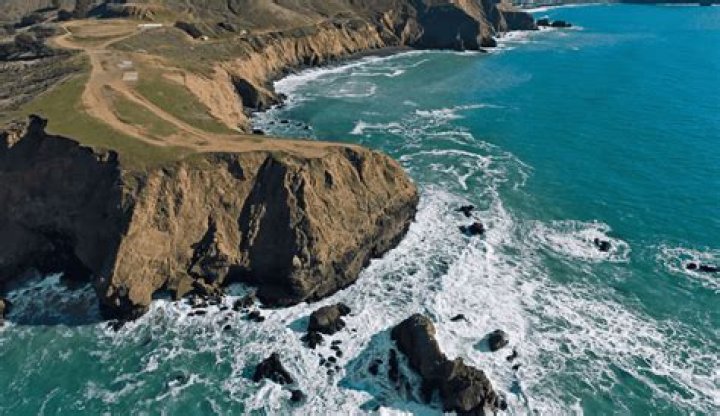
The high oblique is a photograph taken with the camera inclined about 60° from the. vertical. In this type of aerial photograph horizon is visible. It covers a very large area. The ground area covered is a trapezoid, but the photograph is square or rectangular.
What is the difference between high oblique and low oblique photographs?
A low oblique does not show the horizon, while a high oblique includes the horizon. ‘Oblique aerial’ should be distinguished from ‘oblique view’, a non-photographic image.
What are the two types of oblique photographs?
There are two types of oblique photographs: (i) high oblique—one in which the apparent horizon appears—and (ii) low oblique—one in which the apparent horizon does not appear. See aerial photography, low oblique, and high oblique.
What are oblique photographs used for?
Not only are oblique photographs valuable as records and for use in connec- tion with geomorphic studies, but they can also be used for the making of maps and for recording or determining the map locations of various objects of interest.
What is a advantage of oblique?
Pros: presents the exact shape of one face of an object (can take accurate measurements): better for elliptical shapes than axonometric projections, better for “mechanical” viewing. lack of perspective forshortening makes comparison of sizes easier. displays some of the object’s three-dimensional appearance.
Where are oblique photos taken from?
Oblique aerial photographs are taken at angles less than 90 degrees to the ground and are usually taken by a photographer through the window of an aeroplane. This oblique perspective allows us to see more familiar view of the landscape, where details of urban and rural land-use become obvious.
What is the difference between vertical and oblique aerial photographs?
Aerial photographs are generally classified as being vertical or oblique. A vertical photograph is one which has been taken with the camera axis directed toward the ground as vertically as possible, while an oblique photograph is one which has been taken with the camera axis directed at an inclination to the ground.
What is low oblique photography?
A low-oblique photograph is de- fined as a photograph taken with the optical axis intentionally deviated from the vertical, but not sufficiently to include the horizon in the exposure.
What are the different types of aerial photographs?
aerial photographs are classified into the following types : (i) Vertical photographs (ii) Low oblique photographs (iii) High oblique photographs (i) Vertical Photographs: While taking aerial photographs, two distinct axes are formed from the camera lens centre, one towards the ground plane and the other towards the
How are oblique photographs used in remote sensing?
Oblique aerial photographs are taken with the camera pointed to the side of the aircraft. High oblique photographs usually include the horizon while low oblique photographs do not. Oblique photographs can be useful for covering very large areas in a single image and for depicting terrain relief and scale.
What are the disadvantages of vertical aerial photography?
One of the limitations of the vertical aerial photograph is the lack of apparent relief. Stereoscopic vision (or as it is more commonly known, stereovision or depth perception) is the ability to see three-dimensionally or to see length, width, and depth (distance) at the same time.
What is Convergent photography?
Convergent Photography: It is a sequential pair of low oblique in which the optical axes converse towards one another. in this kind of photography both the photographs cover the same area but from different locations (Fig.
What is the difference between a vertical aerial photograph and an orthophoto image?
The aerial photo shows a straight pipeline that is distorted by displacements caused by camera tilting and terrain relief (topography). The orthophoto removes the effects of tilt and relief and shows the true, straight path of the pipeline.
What are the advantages of orthophoto maps?
Orthophotos have the benefits of high detail, timely coverage combined with the benefits of a map including uniform scale and true geometry.
What are the advantages of vertical aerial photographs?
Vertical Aerial Photographs
Vertical images have an advantage over oblique ones in that features on the landscape cannot be obscured by other features. They also benefit from not being as distorted. Indeed, in their center (the center point) distortion is nonexistent.
Why is oblique better than isometric?
An oblique sketch has a more focus on the front side of an object or the face. Isometric Sketch focuses on the edge of an object. It is drawn usually using the 45-degrees angle to render the third dimensions.
Who uses oblique drawing?
Oblique projection was used almost universally by Chinese artists from the 1st or 2nd centuries to the 18th century, especially to depict rectilinear objects such as houses.
Why is oblique drawing important?
Oblique projections
Oblique drawings are not very realistic as it is impossible to see the front of an object straight on and the side at the same time. They can be useful to sketch at speed or to show the front and side of a building.